I Tested 6 Local Models on a Real UI Task
I ran 6 local models on my 5060 Ti to see if they can build a real UI. Five of them gave me a working dashboard, and one of them is good enough to use as a first pass.
My 5060 Ti has 16 GB of VRAM. I wanted to know if that was enough to run a real frontend design task locally, so I wrote a prompt that asked for a beautiful dashboard and gave it to six different open models. I served each one with llama.cpp and drove it from a small Python script. No cloud, no API key.
This post is what I saw.
The setup
Hardware: RTX 5060 Ti, 16 GB VRAM.
Software: llama.cpp for the model server, a Python script that POSTs to the local OpenAI compatible endpoint and saves the reply as an HTML file. The models all ran in GGUF, quantized so they fit the card. I used Q4_K_M for most, Q5 for the bigger ones.
The prompt asked the model to act as a design lead at a small studio, pick a real subject, ground the design in that subject's world, and avoid the three looks that show up in every AI design (warm cream and serif, near black with one acid accent, broadsheet). The model also had to invent a concrete subject, an audience, and a single job for the page when the brief was empty. My only addition was a short line at the end: "Output a single self contained HTML file with Tailwind from the CDN, lots of charts, and no other explanation."
Same prompt. Same temperature. Same script. Six models, back to back.
What I tested
I picked models that claim to handle code and design well and that would fit in 16 GB.
- google/gemma-4-12b (Q4_K_M)
- openai/gpt-oss-20b (Q4_K_M)
- qwen/qwen3.6-27b (Q4_K_M)
- qwen/qwen3.6-35b-a3b (Q4_K_M, the MoE one)
- zai-org/glm-4.6v-flash (Q4_K_M)
- zai-org/glm-4.7-flash (Q4_K_M)
Most models finished in 2 to 10 minutes on the card, depending on size and tokens per second. The one outlier was Qwen 3.6 27B, which took 58 minutes. My desktop only pushes about 5 tokens per second on that model, so a long generation stretches out fast.
What came out
Every model picked a different subject. That is the part I did not expect. The prompt does not name a product, so each model has to invent one. Here is what each one chose and how it looked once I rendered the HTML in a real browser.
Qwen 3.6 27B: Dispatch (the winner)
Qwen 3.6 27B picked a fleet operations dashboard. Dark UI, sharp lines, nine Chart.js panels, a live activity chart that updates every few seconds with a JS setInterval. The data is invented but it reads like real ops telemetry.
This one took 58 minutes to generate. The model thought for a long time before it wrote any code. The wait was worth it. The result is the most beautiful, the most crisp, and the most responsive of the six. Hover over a chart and the tooltip shows that quarter's data with a clean label and a number. Every panel is interactive. Nothing feels static.
If I had to ship one of these as a real product, I would start here.
Qwen 3.6 35B A3B: Meridian (the sweet spot)
35B A3B is a Mixture of Experts. Most of the experts stay quiet on each token, so it feels fast for its size. It chose a portfolio analytics tool, used a JetBrains Mono display face, and went for an editorial look. Lots of small type, lots of dividers, very newspaper.
It is the second most beautiful of the six, and for what it costs in VRAM and time, it is the sweet spot for my desktop. If I am doing local LLM coding on a regular basis, this is the model I reach for.
GLM 4.7 Flash: AETHERIA
GLM 4.7 Flash went sci-fi. A bio-data synthesis console with a grid background, glow effects, and a custom radar chart. There is no Tailwind, the model wrote its own CSS. The page is a single viewport. It looks great on a 1440x900 screen and it is the only one that does not need scrolling.
It is tied for second most beautiful in my eyes, with a little less content than the Qwen 27B. The design choices feel confident. The CSS is tight. If you want a model that finishes fast and still gives you a sharp page, this one is worth a look.
Gemma 4 12B: Project Abyss (fastest, not the prettiest)
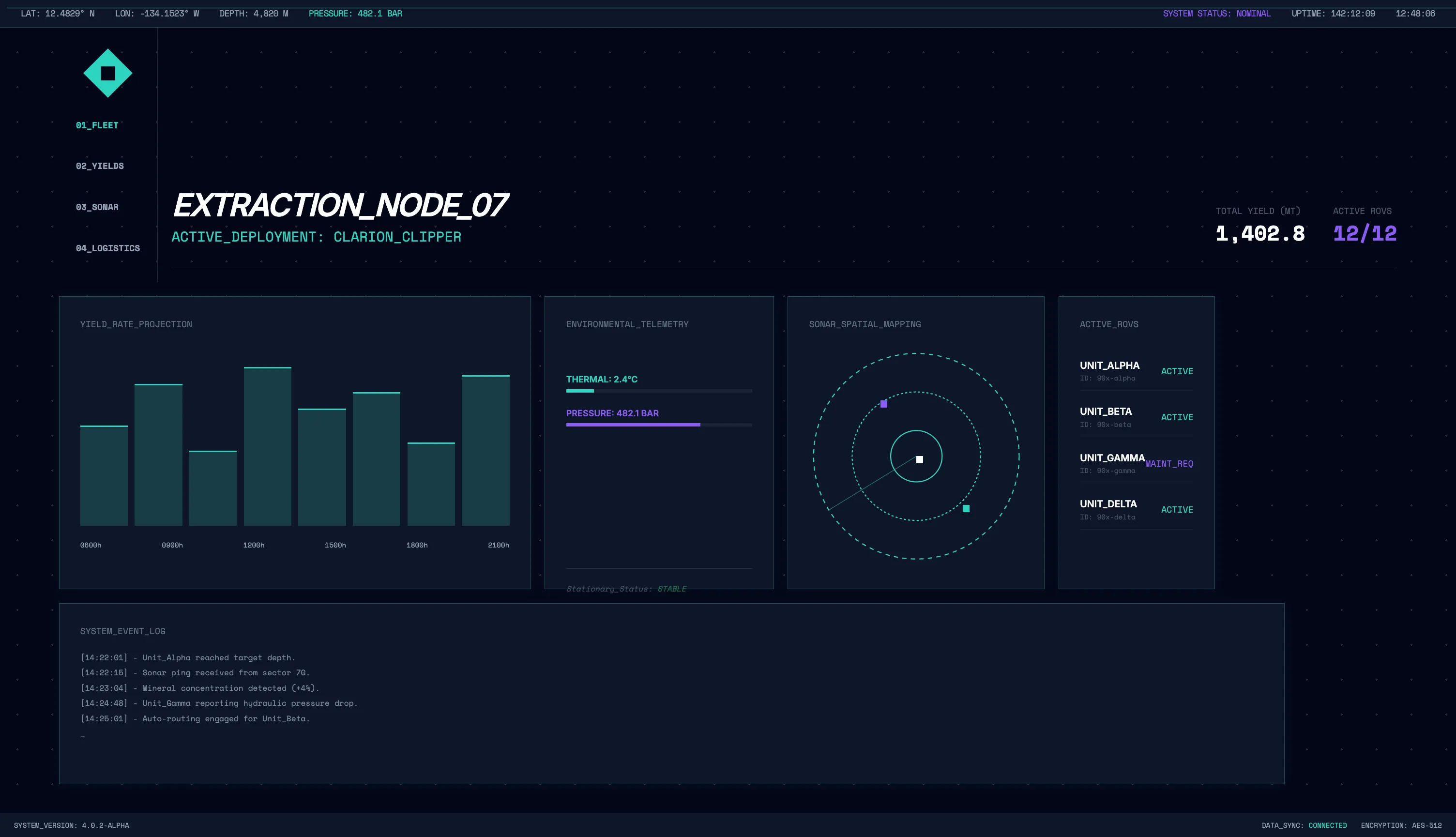
Gemma picked a deep sea mineral extraction dashboard. The look is a tactical HUD. Thin teal lines on near black, monospace data, a small radar plot for sonar, an event log that scrolls with new entries. Charts are hand drawn SVG, no Chart.js.
The UI is the weakest of the six. It feels basic compared to the others. But Gemma finished in about three minutes and barely touched the card. If you need a quick first draft and you do not care about polish, Gemma will give you something to work with in the time it takes to make coffee.
GPT OSS 20B: EcoTrack
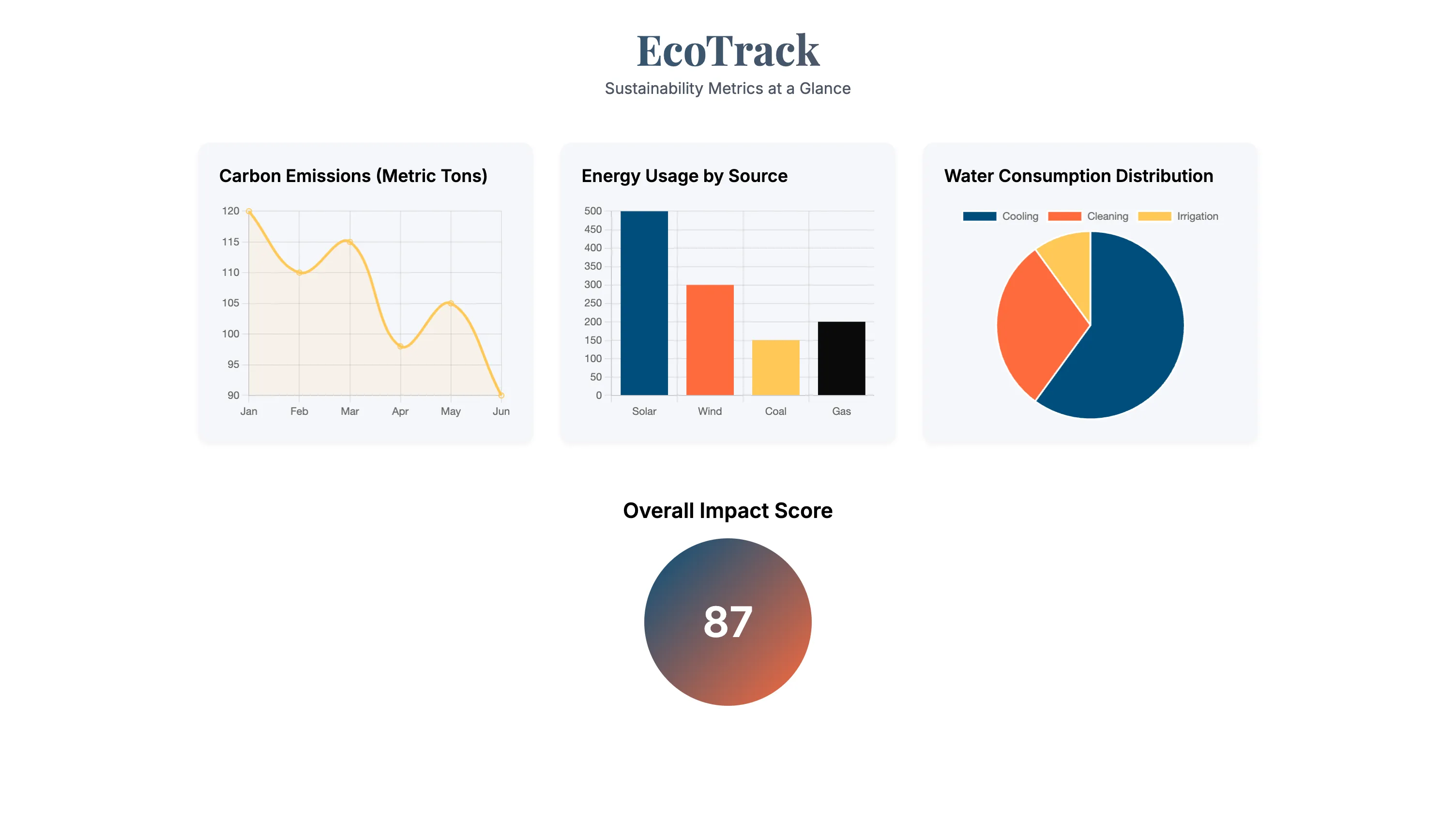
GPT OSS 20B built a sustainability dashboard with a serif headline, a cream background, and three Chart.js panels (a line, a bar, a donut). The page is small, the content is thin, and the design feels a step behind the others. It looks like what AI dashboards looked like a year ago. The model is probably older than the rest, and the output shows it.
The code is clean and the layout is fine, but there is not much of it. This is the one I would not reach for.
GLM 4.6V Flash: I had to drop this one
GLM 4.6V Flash picked an antique piano tuning studio. The hero, the typography, the warm brown palette, all on point. But two of its canvas elements were sized wrong. The chart resize logic in its script set the canvas height to match the document, which made the page about 520,000 pixels tall. I patched the canvas heights in DevTools to confirm the design works, but the raw output was not shippable. I left it out of the screenshots because the bug drowned the design.
This is a fair failure to call out. The model was creative. The model picked a real subject. The model wrote a thoughtful brief. Then it shipped HTML that does not work. That is a normal day with a local model and it is exactly why I wanted to test on a real card instead of just reading benchmarks.
The honest take
Five out of six ran on a single 16 GB card and produced something I could open in a browser. The quality spread was wider than I expected.
The top of the list (Qwen 27B) is good enough that I would use it for a real first pass. The middle (Qwen 35B A3B and GLM 4.7 Flash) is the sweet spot for a daily driver. The bottom (Gemma and GPT OSS 20B) is fine for a quick sketch but not for anything I would show a client.